Top 10 Waterfalls in Venezuela
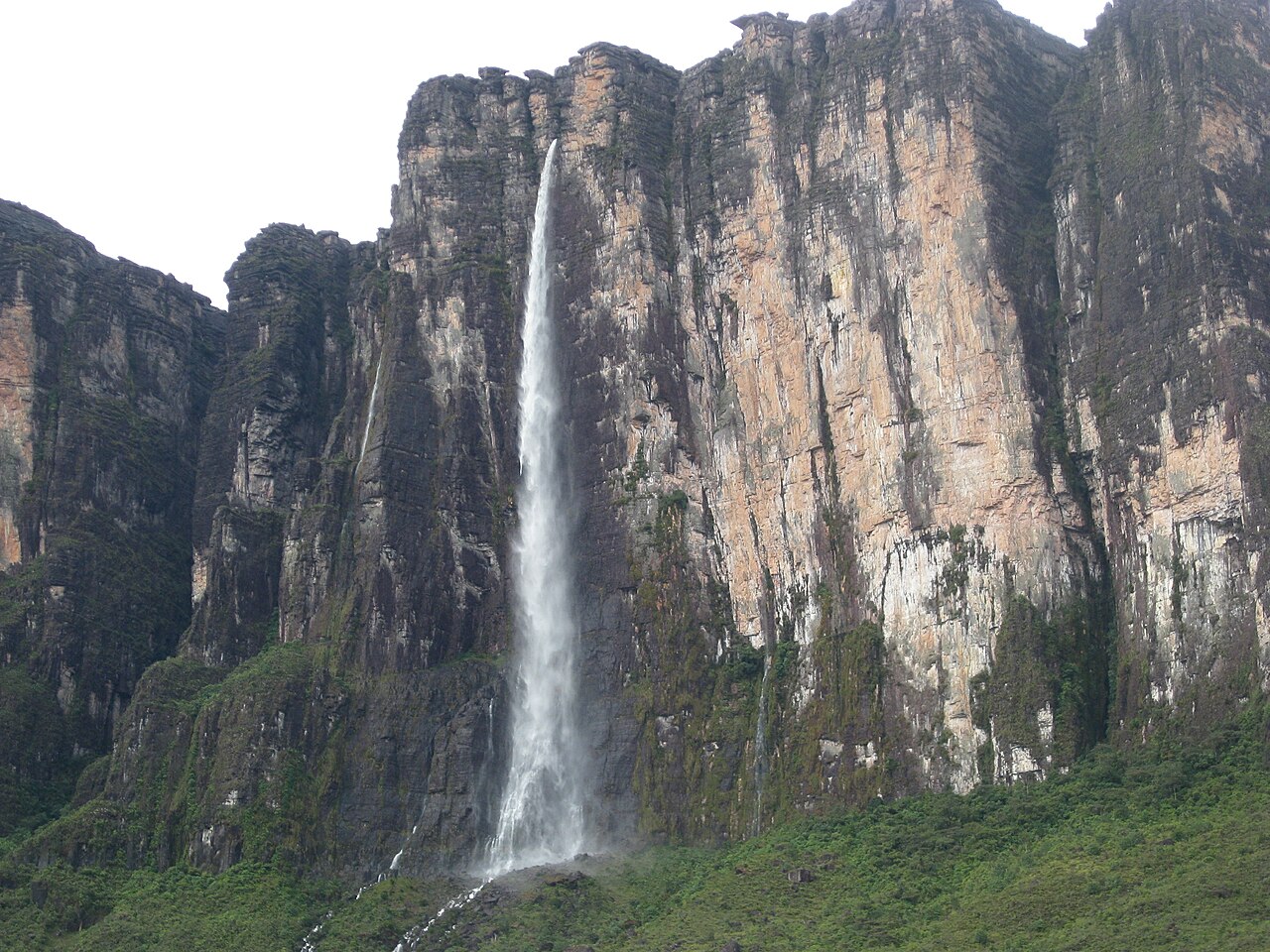
Venezuela's Guiana Highlands contain the most extraordinary waterfall landscape in the world. The ancient sandstone tepuis — flat-topped table mountains rising thousands of metres above the surrounding forest — shed water from their summits in free falls of extraordinary height. Salto Ángel, falling from Auyán-tepui, is the world's tallest waterfall at 979 metres. But it is not alone: the tepui landscape produces dozens of significant falls, most of them deep in one of the world's largest wilderness areas. All are on the map.
1. Salto Ángel (Angel Falls), Bolívar State
Salto Ángel on the Gauja River draining Auyán-tepui in Canaima National Park (UNESCO World Heritage Site) is the world's tallest uninterrupted waterfall at 979 metres total, with the longest single drop measuring 807 metres. The fall is so tall that much of the water disperses into mist before reaching the base, particularly in dry season. Access is by light aircraft to Canaima village followed by a motorized canoe journey on the Churún and Carrao rivers (5–6 hours each way), then a 90-minute hike to the Mirador viewpoint. Alternatively, overflights from Canaima allow close aerial views. Best flow (and base-reach): June to November. Dry season gives clearer visibility but a significantly reduced flow. Type: plunge.
2. Salto Sapo, Bolívar State
Salto Sapo near Canaima Lagoon in Canaima National Park is a falls that visitors can walk behind — a broad curtain dropping approximately 20 metres over a rock shelf, with a ledge path running behind the full width of the curtain. The experience of walking through the spray behind the falls while the lagoon vista appears on the other side is among the most distinctive in Venezuelan waterfall tourism. Accessible by boat from Canaima village. Type: block plunge (walk-behind).
3. Salto Hacha, Bolívar State
Salto Hacha (Axe Falls) on the Carrao River is the other major fall visible from the Canaima Lagoon waterfront, framing the coloured water of the tannin-stained lagoon. The falls drop approximately 30 metres into the lagoon and are accessible on foot from the village airstrip. Year-round flow from the Carrao River. Type: plunge.
4. Salto El Yucamán (Yutajé), Amazonas State
Salto Yutajé in the Amazonas state of Venezuela is a falls draining from a secondary tepui massif, dropping approximately 400 metres in stages. Access is by light aircraft to the nearby community and then by foot with a guide. Rarely visited by international travellers but considered by Venezuelan naturalists one of the country's most impressive remote falls. Best flow: June to October. Type: tiered plunge.
5. Salto Aponwao (Chinak-Merú), Bolívar State
Salto Aponwao on the Aponwao River near Iboribo in the Gran Sabana drops 105 metres in a single plunge into a canyon surrounded by tepui savanna. The falls are accessible by 4WD from Santa Elena de Uairén (130 km) and then a 1.5-kilometre walk. One of the most accessible significant falls in the Gran Sabana. Best flow: June to November. Type: plunge.
6. Salto Kukenan, Bolívar State
Salto Kukenan falls from the tepui of the same name adjacent to the Roraima massif — the tepui that inspired Sir Arthur Conan Doyle's "The Lost World." The falls drop approximately 674 metres from the tepui rim. Access requires a 4-day guided trek to the base of Roraima from Paraitepuy, with the falls visible from the approach trail. Best flow: June to October. Type: plunge.
7. Salto Para, Bolívar State
Salto Para on the Paragua River is a broad river cataract rather than a tall plunge, but at peak monsoon flow it spreads across the full width of the river (several hundred metres). It is the waterfall that generates the most volume of any fall in Venezuela. Remote location on the Paragua, accessible by river boat or light aircraft. Best flow: July to October. Type: cataract.
8. Salto Yuruani, Bolívar State
Salto Yuruani in the Gran Sabana drains the Yuruani River off a broad basalt shelf and drops approximately 35 metres into a pool surrounded by savanna. Accessible from the road between Santa Elena de Uairén and Canaima on the Gran Sabana highway. One of the most roadside-accessible falls in the region. Year-round flow; best June to October. Type: cataract/plunge.
9. Salto Acaponcito, Bolívar State
Salto Acaponcito is a lesser-known 150-metre plunge in the Canaima National Park interior, accessible only by guided expedition from Canaima. Part of the wider Caura River watershed. Rarely visited. Best flow: June to November. Type: plunge.
10. Salto La Llovizna, Bolívar State
Salto La Llovizna (Drizzle Falls) in the Parque La Llovizna within the city of Puerto Ordaz is Venezuela's most accessible major waterfall — an urban park built around a 30-metre falls on the Caroní River with paved walkways, suspension footbridges, and a visitor centre. The Caroní River carries the blue-black tannin water of the Guiana Shield. Year-round flow from the Guri Reservoir. Type: cataract/plunge.
Understanding the Tepui Landscape
The tepuis are some of the oldest exposed geological formations on earth — Precambrian sandstone dating to over 1.7 billion years — and they sit above the surrounding lowland forest as isolated biological islands. Their biological endemism (species found only on the surface of individual tepuis) is extraordinary, and the UNESCO World Heritage designation of Canaima covers both the waterfall landscape and this biological significance. The best time to visit is June to November for full waterfall flow, though cloud cover is highest in this period. December to May gives better visibility but significantly reduced falls.
Visiting Angel Falls: logistics in full
The standard Angel Falls itinerary from Caracas or Ciudad Bolívar involves a flight to Canaima (approximately 1 hour from Ciudad Bolívar), one to two nights in Canaima village or a riverbank camp, and a motorized canoe journey of 5 to 6 hours each way up the Carrao and Churún rivers to the Isla Ratón base camp. From the camp, a 1.5-kilometre trail through jungle leads to Mirador Laime, the primary ground-level viewpoint. The entire river and foot journey takes two days from Canaima.
Overflights from Canaima on light aircraft are the alternative: a 20-minute flight passing directly alongside the falls gives proximity that the ground viewpoint cannot. At full wet-season flow, the overflying aircraft enters cloud and spray; at dry-season low flow, visibility to the full column is better but the flow is significantly reduced. Most travellers opt for both — the overflight for scale and the canoe trip for the river journey and Tepui forest experience.
Canaima National Park covers 30,000 square kilometres and Venezuela's current political and infrastructure conditions mean that access is more variable than in most countries of similar visitor interest. All falls described here are on the map.
How Angel Falls got its name
Despite the Spanish name Salto Ángel, the falls are not named for the angelic. They take their name from Jimmie Angel, a US aviator and gold prospector who landed his Flamingo monoplane on the summit of Auyán-tepui in 1937 while searching for the gold ore river he had located on a previous flight. The aircraft sank into the boggy surface on landing and could not take off; Angel, his wife Marie, and two companions walked off the tepui over 11 days through dense jungle to the nearest settlement. Angel was not the first person to see the falls from the air — a Spanish explorer and a series of aerial surveys had documented them — but his 1937 effort brought the falls to international attention. His aircraft remained on the tepui summit for 33 years; it was eventually airlifted by helicopter in 1970 and is now on display at the Ciudad Bolívar airport. The Pemón indigenous people, who had lived alongside and below the tepuis for centuries, call the falls Kerepakupai Merú, meaning "waterfall of the deepest place," and this name is increasingly used alongside the Angel Falls designation in Venezuelan national discourse.